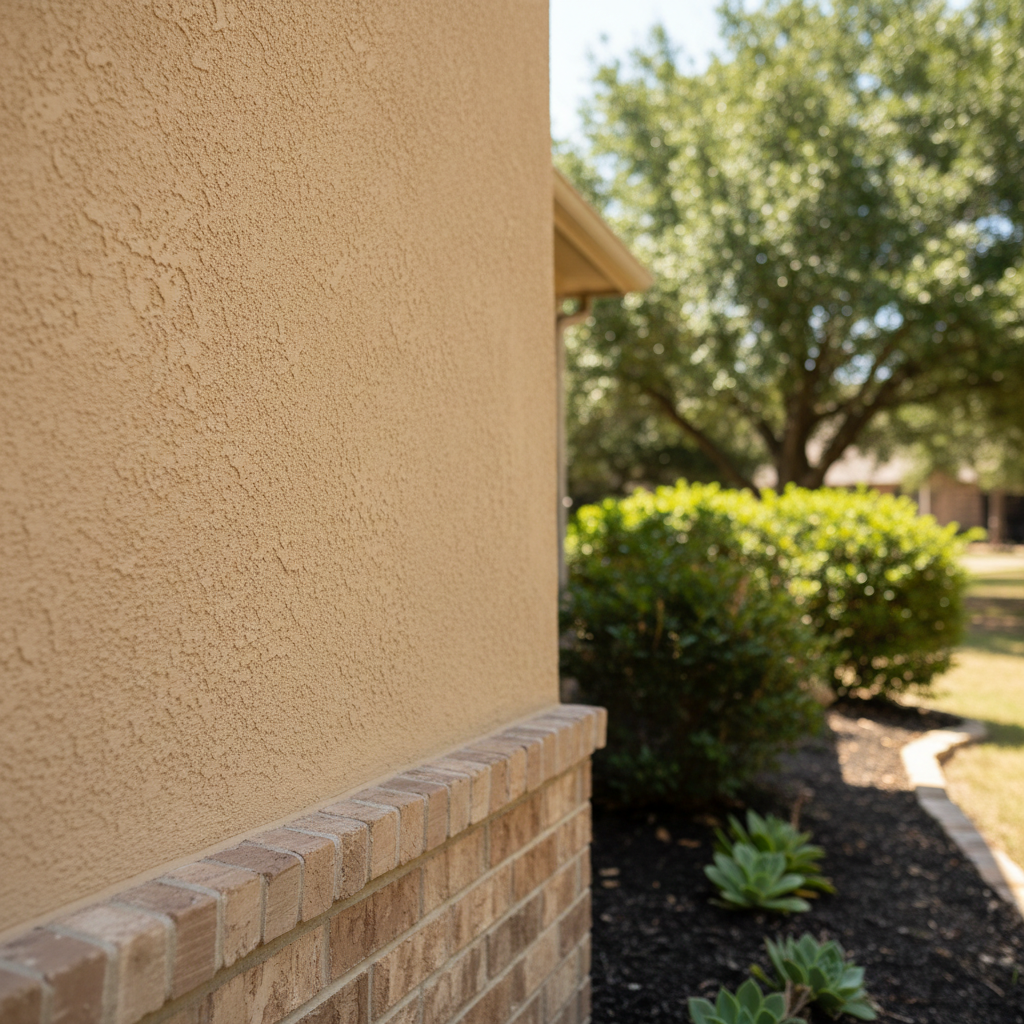
Many homes around Leander feature an exterior wall appearance that looks like smooth stone while handling the hot Texas summer heat. This cladding is often EIFS, which stands for Exterior Insulation and Finish System. Paramount Stucco Solutions receives many questions from homeowners who are either building new homes or upgrading their current exterior cladding. Property owners often ask about EIFS installation for homes in Leander, TX.
What actually is EIFS and how does it differ from traditional stucco?
Homeowners often mix up EIFS with standard hard-coat stucco because both materials look very similar from the curb. Traditional stucco is a heavy, multi-layer cement mixture applied over metal lath. EIFS, on the other hand, is a multi-layered synthetic wall system. The installation starts with an insulation board attached to your exterior sheathing, followed by a base coat reinforced with fiberglass mesh, and finishes with a textured acrylic coat. The big difference is thermal performance. EIFS gives you continuous insulation, meaning your air conditioner does not work quite as hard when July temperatures spike across Williamson County.
How do modern EIFS installations handle moisture?
Moisture is usually the first real concern homeowners bring up, and for good reason. Older EIFS installations from past decades gained a bad reputation because they were barrier systems. Those older systems relied entirely on keeping water out, and if moisture got trapped behind the walls, it had nowhere to go. Modern EIFS is very different. Today installations include built-in drainage planes. If any incidental moisture gets past the outer layer, it flows down a water-resistant barrier and safely exits through weep screeds at the base of the wall. Proper installation of flashing and sealants around windows and rooflines is what keeps everything dry.
Will EIFS crack easily in the Texas clay soil?
Leander is known for shifting foundation movement due to local expansive clay soils. Traditional brittle stucco can crack when walls shift even a fraction of an inch. EIFS handles minor structural movement much better because the fiberglass mesh embedded in the base coat provides flexibility and tensile strength. However, no exterior wall system is completely immune to shifting foundations. Control joints and proper detailing around openings are important during installation to absorb that movement before it shows up on your surface.
How long does the installation process take?
A typical residential EIFS project does not happen in a single weekend. For an average-sized home in Leander neighborhoods like Crystal Falls or Block House Creek, the work takes roughly one to two weeks depending on weather conditions and the complexity of your architecture. Paramount Stucco Solutions allows proper curing times between the foam attachment, base coat applications, and the final textured finish coat. Rushing any of these steps leads to future failure, so patience is part of the job.
Can EIFS be matched to my existing exterior or neighborhood style?
Yes. One of the main benefits of EIFS is its design flexibility. Whether you want a fine sand finish, a pebble texture, or architectural details like quoins and pop-outs around your windows, the system can be molded to fit almost any aesthetic. Plus, the acrylic finish coats can be tinted to thousands of different colors, meaning you are not stuck painting it right away.
What kind of maintenance does an EIFS home need?
Maintenance is straightforward, but homeowners cannot simply ignore it for twenty years. You will want to wash down the exterior every couple of years to keep dust and pollen from building up. More importantly, you need to inspect the caulking around your windows, doors, and penetrations annually. Sealants degrade under the Texas sun over time, and keeping those joints tight is your first line of defense against leaks.
For homes and businesses in Leander, Paramount Stucco Solutions provides EIFS installation services.